Marine and coastal operations training

MPA ENFORCEMENT & PATROL OPERATIONS

MPA enforcement, marine ranger training and small-boat patrol operations

Conservation Outcomes provides MPA enforcement and marine ranger training, together with operational support for protected-area managers, authorities and conservation partners. We establish and strengthen patrol capability through personnel selection and training, small-boat crew development, operational planning, vessel support and field mentorship.

Discuss your operational requirements

SPECIALIST EXPERTISE

Marine and freshwater specialists with extensive operational experience

Conservation Outcomes brings together marine and freshwater specialists with practical experience in protected-area management, conservation law enforcement, military special operations, search and rescue, small-boat operations, and the training and development of operational teams.

That experience enables practical, site-specific support for MPA managers, planners, authorities and conservation partners responsible for patrol, compliance and enforcement operations.

Detailed CVs are available on request.

Freshwater and small-boat operations training

MARINE AND FRESHWATER EXPERIENCE

Selected operational experience

Conservation Outcomes has delivered assessments, personnel selection, training and operational support across marine, coastal, riverine and freshwater protected areas in Africa and the Middle East. Selected experience includes:

Field team assembled on a shoreline with a mountain backdrop

Maputo National Park, Mozambique

Under the World Bank-funded MozBio 2 project, Conservation Outcomes assessed park security requirements and developed the Protected Area Security Plan.


In addition to field ranger training, we selected and developed boat crews, delivered water orientation and surf-launching training, prepared skippers and crews for day and night patrols and commissioned a coastal patrol vessel.


We operationalised the park’s first effective marine patrol unit with trained personnel, operating procedures and a commissioned vessel.

Parque Nacional do Mágoè, Mozambique

Small-boat crew selection and training, and development of the park’s first boat-based unit on Lake Cahora Bassa.

Gorongosa National Park, Mozambique

Water orientation and riverine small-boat training.

Table Mountain National Park, South Africa

Recruitment, selection and marine-phase training for the Sea, Air and Mountain (SEAM) Unit.

Maputo National Park, Mozambique

Under the World Bank-funded MozBio 2 project, Conservation Outcomes assessed park security requirements and developed the Protected Area Security Plan.


In addition to field ranger training, we selected and developed boat crews, delivered water orientation and surf-launching training, prepared skippers and crews for day and night patrols and commissioned a coastal patrol vessel.


We operationalised the park’s first effective marine patrol unit with trained personnel, operating procedures and a commissioned vessel.

Gorongosa National Park, Mozambique

Water orientation and riverine small-boat training.

Parque Nacional do Mágoè, Mozambique

Small-boat crew selection and training, and development of the park’s first boat-based unit on Lake Cahora Bassa.

Table Mountain National Park, South Africa

Recruitment, selection and marine-phase training for the Sea, Air and Mountain (SEAM) Unit.

Saudi Arabia – Farasan Islands and Al Jubail MPA

Direct involvement in the MPA management planning process, including risk and operational needs assessments to inform protection, management and operational planning.

FROM DESIGNATION TO OPERATIONS

From MPA designation to effective patrol and enforcement capability

Designation establishes the legal framework for a marine protected area, but effective protection depends on capable personnel, clear authority and procedures, appropriate patrol systems, suitable vessels and equipment, and consistent operational leadership.

Conservation Outcomes works with MPA managers, planners and authorities to assess the mandate, threats, operating environment, existing enforcement capacity, personnel, vessels, equipment and available resources. This assessment is used to define the patrol capability, personnel development, training, procedures, equipment and implementation support required.

Where relevant, this includes assessment of Monitoring, Control, Surveillance and Enforcement (MCS&E) requirements and operational input to MPA enforcement strategies, enforcement plans and MPA management plans.

Assess → Plan → Select and Train → Equip → Implement → Mentor and Improve

Assess → Plan → Select and Train → Equip → Implement → Mentor and Improve

TRAINING AND OPERATIONS

Practical MPA patrol, enforcement and small-boat operations training

Marine rangers conducting water orientation and basic free diving and snorkelling training

Water Confidence, Survival Swimming and Water Safety

Open-water training with a group of marine ranger

SURFACE SWIMMING AND FREE DIVING

Marine Ranger conducting practical first-aid training and CPR

FIRST AID AND EMERGENCY RESPONSE

Protected-area personnel working through an operational planning exercise

PATROL PLANNING AND NAVIGATION

Patrol-boat skipper and crew training at Maputo National Park, Mozambique

CREW TRAINING AND SURF LAUNCHING

Marine patrol boat and crew at a rocky shoreline

Small-boat operations and coxswain/skipper development
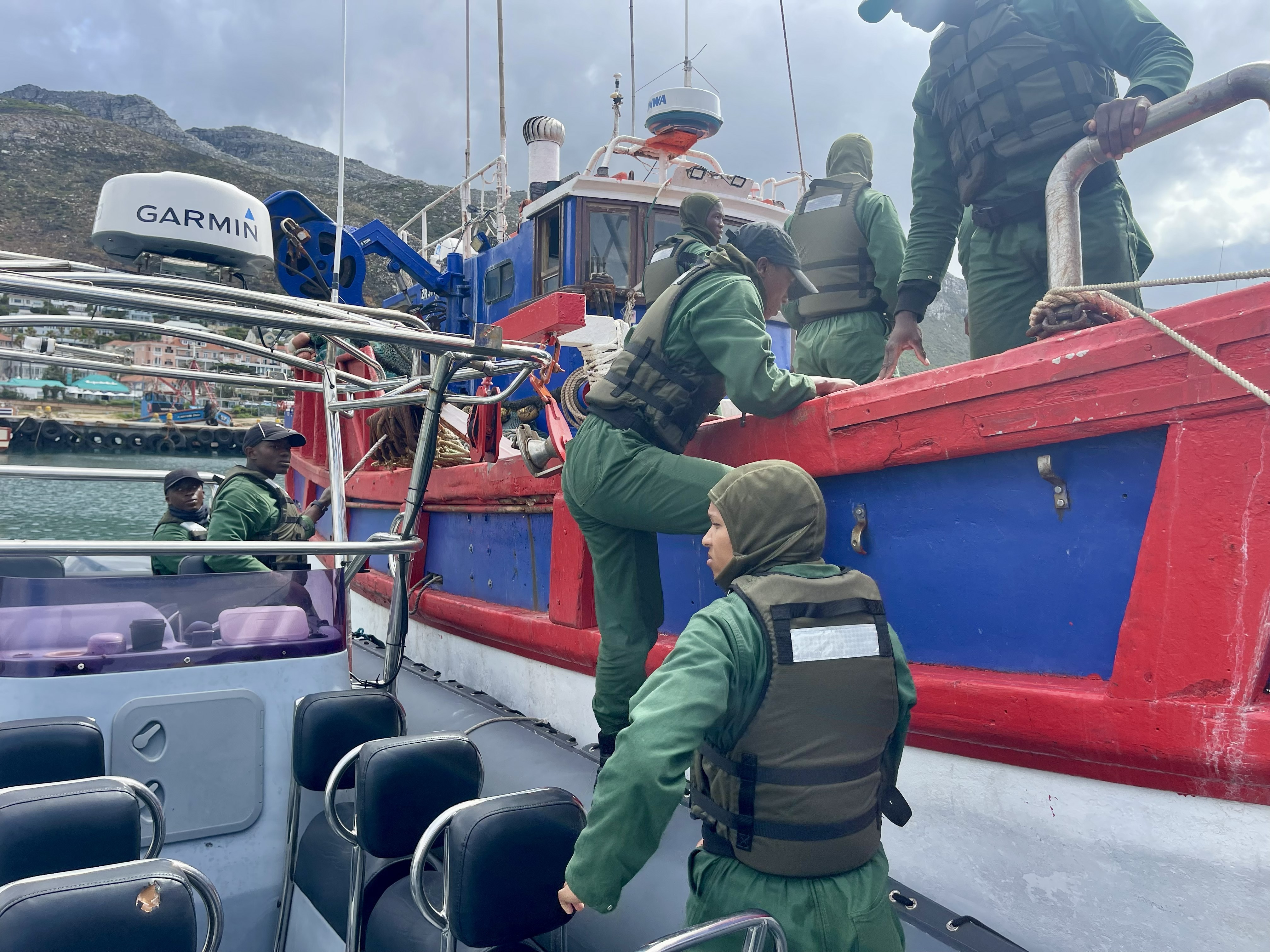
Boarding, inspection and compliance training for marine patrol personnel

Boarding, Inspection and Compliance

TRAINING DELIVERY

Site-specific, competency-based training and capacity development

Each programme is designed around the protected area's mandate, threats, operating environment, personnel, vessels and equipment. Training requirements are defined by the operational role and existing capability rather than by a fixed generic syllabus.

Personnel may enter training with very different levels of water confidence, swimming ability and boating experience. Where required, training begins with water orientation, survival swimming and water safety before progressing to boat handling, navigation, crew operations, patrol and enforcement skills. Progression is based on demonstrated competence in prerequisite skills rather than attendance alone.

Following each programme, management receives an assessment report for each participant and a formal debrief covering training outcomes, competence, development needs and recommendations.

Selected marine and freshwater ranger training areas

Training is grounded in the protected area’s mandate, operational procedures and the legal authority applicable to personnel undertaking patrol and enforcement duties. Roles, responsibilities, reporting lines and operational limitations are clarified before practical enforcement training.

Roles and responsibilities of skippers and boat crews

Marine conservation, monitoring, compliance and enforcement

Applicable legislation and regulations, human rights obligations, use-of-force principles and limits of authority

Command arrangements and accountability

Site-specific threats, risks and operating procedures

Engagement with local communities and resource users

Participants develop the water confidence, survival skills and emergency-response competence required to operate safely on and around the water.

Assessment of water confidence, swimming ability and suitability

Water orientation, survival swimming and water safety

Floating, treading water, surface swimming and breath control

Man-overboard procedures, capsize drills and onboard firefighting

Water search and rescue, rescue towing and casualty recovery

Marine first aid, drowning response and CPR

Develops the vessel-handling, navigation and crew competence required to prepare, operate and maintain assigned vessels safely and effectively.

Vessel familiarisation, preparation, readiness checks and maintenance

Lifejackets, PPE and onboard safety equipment

Crew roles, skipper responsibilities, command, judgement and crew coordination

Boat handling, launching and recovery, including surf launching and beaching where applicable

Day and night vessel operations

Assessment of weather, tides, currents, surf, river conditions and site-specific hazards

Recognition of individual, crew and vessel operating limits

Navigation, collision-avoidance rules, communications and position reporting

Ropework, anchoring and mooring

Safe carriage, security and operational use of firearms

Develops the planning, command and conservation law-enforcement competence required to conduct safe, disciplined and lawful marine and freshwater patrols.

Patrol planning, preparation, briefing and command

Patrol communications, reporting and position tracking

Monitoring, compliance inspections and enforcement action

Identification of illegal fishing practices and recovery of illegal or abandoned fishing gear

Vessel boarding, inspection, search and seizure procedures

Deployment and recovery of land teams, swimmers and divers

Operational information and intelligence gathering

Safe carriage, security and operational use of firearms

Evidence handling and chain of custody

Supervised operational deployment brings individual and crew skills together and assesses competence against defined roles, standards and operating conditions.

Operational patrols and site-specific scenarios

Site-specific tactics, techniques and procedures

Operational debriefing

Assessment of judgement, leadership and teamwork

Assessment of competence for specific roles, vessels and operating conditions

Competence and operational readiness

Competence is assessed against the roles, vessels and operating conditions relevant to each programme. Where further experience or training is required, this is identified as part of the assessment process. Final deployment and operational authorisation remain the responsibility of protected-area management.

OPERATIONAL SUPPORT

Operational support beyond training

Effective MPA enforcement depends on more than training. Personnel, plans, vessels, equipment, procedures, supervision and management systems need to work together. Where required, Conservation Outcomes supports assessment, operational planning, vessel commissioning, implementation and field mentorship.

MPA Enforcement Assessment & Operational Planning

Enforcement, operational and training-needs assessments

Assessment of MCS&E and patrol capability requirements where relevant

Operational input to MPA planning and establishment, including MPA Management Plans

Development of site-specific MPA Enforcement Plans and Protected Area Security and Operations Plans where required

Patrol Vessel Specification, Procurement & Commissioning

Vessel and equipment specification for the operating environment and intended role

Procurement and logistics support

Vessel commissioning and entry into operational service

Maintenance, inspection and servicing systems

Implementation, Mentorship & Continuing Support

Boat patrol unit establishment and crew development

Standard operating procedures, checklists and bilingual logbooks

Field mentorship, refresher training and competence revalidation

Marine patrol boat carrying field personnel along a sandy shoreline

Discuss your MPA, marine or freshwater requirements

Whether establishing patrol and enforcement capability for a new MPA, strengthening an existing marine patrol unit, or developing a freshwater boat operation, Conservation Outcomes can help define and deliver the assessment, personnel selection, training, vessel support, implementation and mentorship required.

Start a Conversation